
11 Signs Your PC Is Ruining Your Productivity (And Your Mood)
- Aug 28, 2025
- 7 min read
Updated: Feb 9

You notice it before you even sit down. You open your laptop or desktop PC and get ready for the wait. A slow PC delays your work, breaks your focus, and wastes small bits of time, making easy tasks feel harder. Over the week, these delays add up to missed starts, rushed finishes, and a lingering stress that sticks with you all day.
If you work from home, study, run a business, or try to stay on top of life admin, your computer becomes part of your routine. When it lags, you adjust around it. You avoid tasks, you multitask poorly, and you start expecting problems. The good news is that many performance issues have a clear cause. With the right fix, your PC can feel dependable again.
Here are 11 signs it is time to stop putting up with poor performance and consider a fix, upgrade, or repair from the local pros at Perfect PC in NZ.
1. It Takes Forever Just to Start Up
Slow start-ups might start as a small annoyance, but soon they become part of your routine. You press the power button, make a cup of tea, and return to a screen that still isn’t ready. It feels like you’re losing time before you even start.
This matters because it sets the tone for your day. If your desktop PC starts slowly, everything else tends to feel slow, too. In many cases, a tune-up can reduce start-up delays and make mornings feel simpler.
2. Your Apps Freeze at the Worst Possible Moments
App freezes never seem to happen when you have extra time. They strike during a video call, in the middle of an assignment, or right before you send something important. The real problem isn’t just the freeze—it’s the interruption. You lose your train of thought, repeat steps, and waste time getting back on track.
Over time, these pauses chip away at productivity. You start saving every few seconds, you hesitate before opening files, and you avoid tools that you need for work. If apps keep locking up, it usually means something is not coping. A proper check can find the cause and stop the same issues from repeating.
3. You’re Constantly Restarting Just to “Fix It”
A restart can help after a one-off glitch. But if restarting has become your daily fix, it is a sign that something deeper is going on. Restarting clears the surface problem for a moment. It does not resolve the cause.
That is why the same issues return. You restart to stop a freeze, but then the slowdown comes back. You restart to fix a bug, but the error appears again later. When you need constant reboots to get through normal tasks, your PC needs a real diagnosis, not another temporary reset.
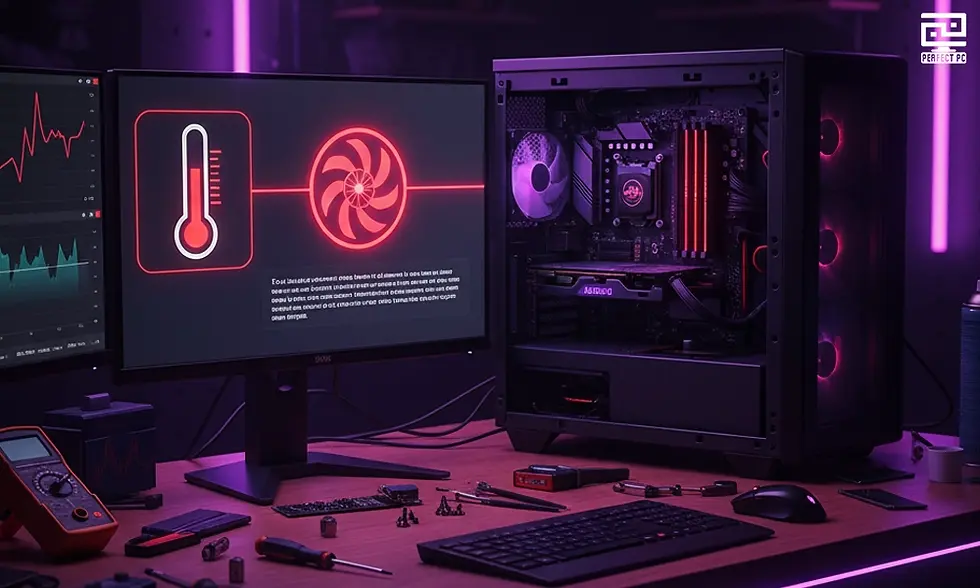
4. Your Fan Sounds Like It’s About to Take Off
A loud fan often points to heat build-up. In many homes, this comes down to dust and missed maintenance. PCs pull air through vents to stay cool. When dust blocks airflow, the system works harder to control temperature, so the fan runs louder.
This is more than an annoyance. Excess heat can lead to crashes, lag, and reduced component life. If your desktop PC has not been cleaned in a long time, a proper clean-out and service can make it run cooler and quieter. It also helps prevent bigger problems later.
Quick fixes you can try in 10 minutes (before you book a repair)
If your PC feels slow, a few quick checks can help. These steps will not fix every problem, but they often remove the obvious bottlenecks.
Do a full restart rather than closing the lid and leaving it in sleep mode.
Close heavy apps and extra browser tabs, especially during meetings or study sessions.
Check storage space and delete large files you no longer need, including old downloads.
Pause cloud sync during important work, such as OneDrive or Google Drive uploads.
Run updates for your operating system and key apps, since missing updates can cause slowdowns.
Run a malware scan, because unwanted software can drain performance quietly.
Disable start-up apps you do not use, so your PC does less work when it boots.
If the same symptoms keep returning after these steps, it is a sign that the problem sits deeper than day-to-day settings.
5. Your Mouse Clicks Don’t Respond Immediately
Click. Nothing. Click again. Then it responds twice. Input lag breaks your workflow because every task takes longer than it should. It also makes you second-guess whether you did something wrong when the real issue is the system response.
This can be caused by overloaded resources, driver problems, or hardware faults. If it happens often, a diagnostic can narrow it down quickly.
6. You Can’t Multitask Without Everything Slowing Down
If your PC struggles with a browser, a document, and a spreadsheet at the same time, it is not keeping up with modern use. You end up working in a stop-start way, closing things just to make other things work.
In many cases, the best fix is an upgrade that targets the bottleneck. That might be more memory, faster storage, or a general tune-up that removes unnecessary strain.
7. You Find Yourself Getting Irritated More Often Than You Should
When your computer slows you down all day, it affects your mood. You feel rushed, you lose patience, and you carry that frustration into calls and conversations. The issue is not just time. It is how often your focus gets broken.
A PC should support your day, not drain it. If your system makes routine tasks feel like a battle, it is worth fixing.
8. Files Take Ages to Open (or Don’t Open at All)
Slow file access often points to storage issues, corrupted files, or a system that is struggling in the background. When files fail to open, the risk is bigger. It can suggest the drive is unstable or beginning to fail.
If you rely on your PC for work or study, do not ignore this. It is often cheaper to fix early than recover data later.
9. You Avoid Certain Tasks Because the Computer Can’t Handle Them
If you stopped editing photos, joining video calls, or using business tools because the PC freezes, that is a strong sign your system is holding you back. You start changing your habits to suit the machine, and that limits what you can do.
Often, a targeted upgrade brings an older machine back to life and makes those tasks feel normal again.
10. Your Battery Dies Way Too Fast (If It’s a Laptop)
A laptop that cannot hold a charge makes you plan your day around a power socket. That is frustrating and impractical, especially if you study, travel, or move between rooms.
Battery issues can come from age, background processes, or charging faults. A technician can check what is happening and tell you whether a replacement or a settings fix makes sense.
11. You’ve Stopped Expecting It to Work Smoothly
This is the biggest sign. If you accept lag, freezes, and delays as “normal”, your expectations have changed, but the problem has not. Many people avoid fixing it because they assume the solution is expensive or complicated.
In reality, many fixes are affordable. A tune-up, a clean, or a well-chosen upgrade can deliver a noticeable difference without buying a new machine. If you want your desktop PC to feel steady again, a proper check and the right fix can make day-to-day work feel simpler.
When to Upgrade vs When to Repair (And What Usually Gives the Best Value)
The right choice depends on what is wrong and how old the system is. In many cases, you do not need a full replacement. You need a smarter fix.

When an Upgrade Often Makes Sense
Choose an upgrade when your PC still works, but feels slow for daily use.
SSD upgrade for faster start-up and file access
RAM upgrade for smoother multitasking
System clean-up to remove bloat and reduce background load
When a Repair Often Makes Sense
Choose a repair when your PC shows faults that cause instability.
Overheating and loud fans
Random shutdowns or restarts
Errors, crashes, or failing storage signs
Possible malware or software conflicts

When Replacing May Be the Better Option
Replacing your PC makes sense if it’s very old, can’t run modern software well, or costs more to fix than it’s worth. A technician can quickly let you know and offer options.
If you want the best value, start with a proper check. We can find out what’s slowing your PC down and let you know if a small change will fix it.
Your Time Is Valuable, Don’t Let a Slow PC Waste It
A slow PC doesn’t just delay your tasks. It drains your focus, raises your stress, and makes your day harder than it should be. The longer you wait, the more those small delays add up to lost time and energy.
Perfect PC Services provides trusted, local support for everyday PC users across New Zealand. Whether you need a tune-up, help upgrading an older computer, or a full repair, we can help you get your PC running smoothly and reliably again.
Frequently Asked Questions
1. What are the most common signs a PC needs repair or an upgrade in Auckland?
The most common signs are slow start-up, freezing apps, constant restarts, loud fan noise, and files that open slowly or fail.
Slow boot times and heavy background programmes
Apps freezing during normal tasks
Frequent restarts to “fix” problems
The fan is running loudly, which can point to heat or dust
Struggling to multitask, often linked to RAM limits or an ageing drive
Files are taking ages to open, or not opening at all
2. Why is my computer so slow today, and when should I get it checked in Auckland?
Your PC often slows down due to too many background programmes, outdated hardware, operating system errors, or drive health issues. Get it checked if the slowdown keeps returning, or if you notice any of these patterns:
Start-up takes “forever” and does not improve
Freezes happen more often, especially with modern apps
Multitasking causes the whole system to crawl
Files lag, error, or stop opening
3. Why does my PC keep restarting, and can I bring it to Whenuapai (Auckland) for diagnosis?
Repeated restarts can come from overheating, software conflicts, failing hardware, or malware running in the background.
Yes, you can bring it in by appointment to 9 Kennedys Road, Whenuapai, Auckland, and the site notes booking is essential.


Geeks On Site offers expert PC maintenance, repairs, and productivity-boosting solutions.